Postmasters Gallery (NYC)
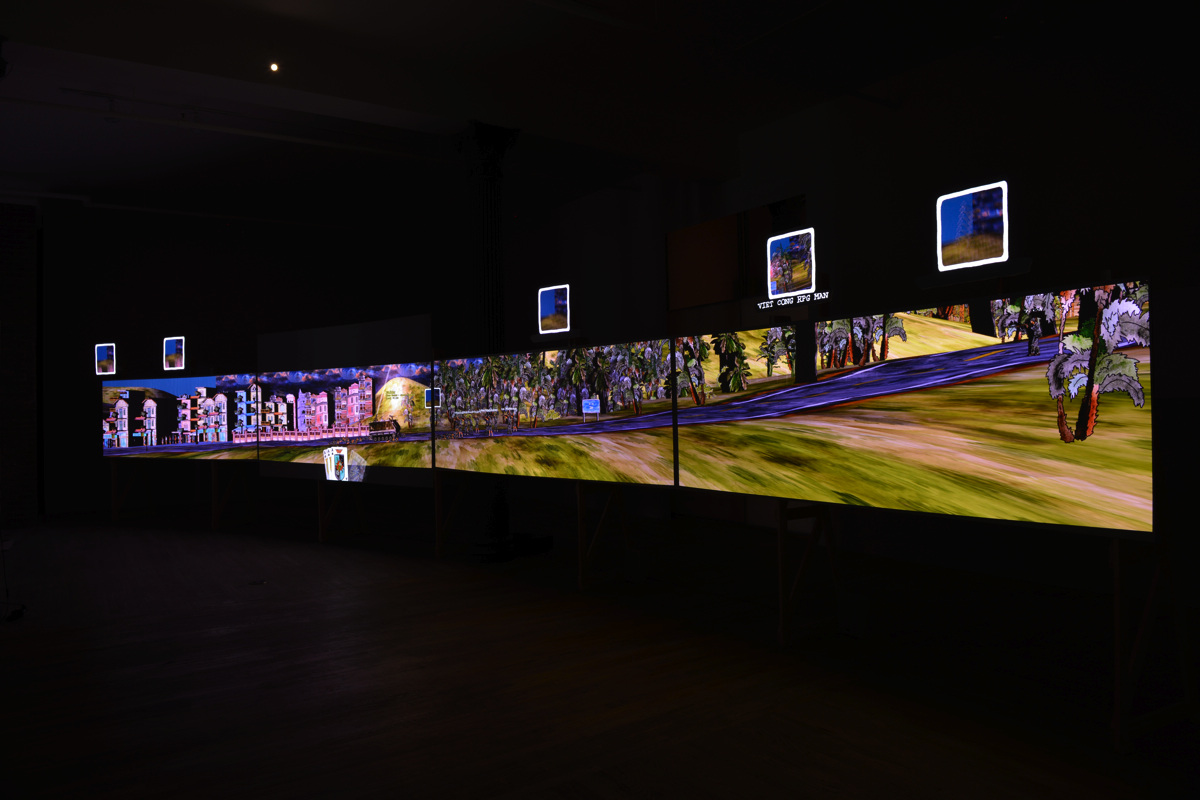
The show at postmasters had the most complex projection setup of any of our installations. Four projectors were used together to show the game in 48:9 “extreme wide mode”, on a plywood projection surface, with several “popup” details mapped onto separate floating objects. I built an in-game UI editor to allow us to modify the precise position of each floating popup from a wireless keyboard.
The extreme wide mode necessitated support for adjusting the in-game camera view on the fly. The camera system now supports preconfigured several “camera modes” corresponding to our various installations and performances, as well as an in-game editor.
The Postmasters show is also the only time we exhibited the Vietnam countryside generator, which spawned a continuously scrolling environment with various biomes and random enemy encounters. We realised the game would need scenes like this to work as self-playing attract modes that allow players to pick up and play the game at any point, to prevent awkward “dead air.”

Dundee Contemporary Arts, Scotland
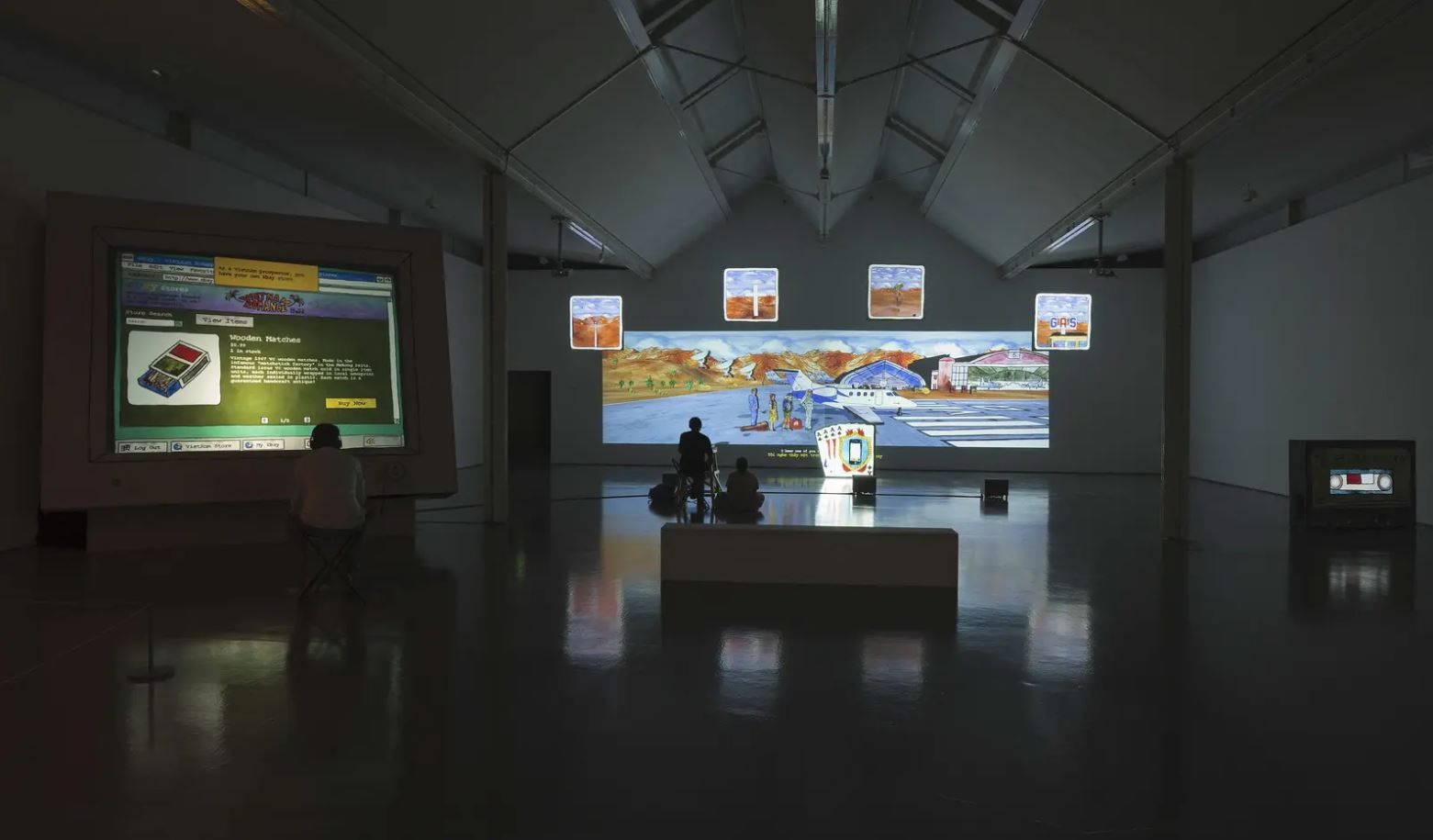
The main game installation was composed of two overlapping projections: one for the main game and hand of cards, and another for the four excerpted “popup windows”, which show details of objects in game.
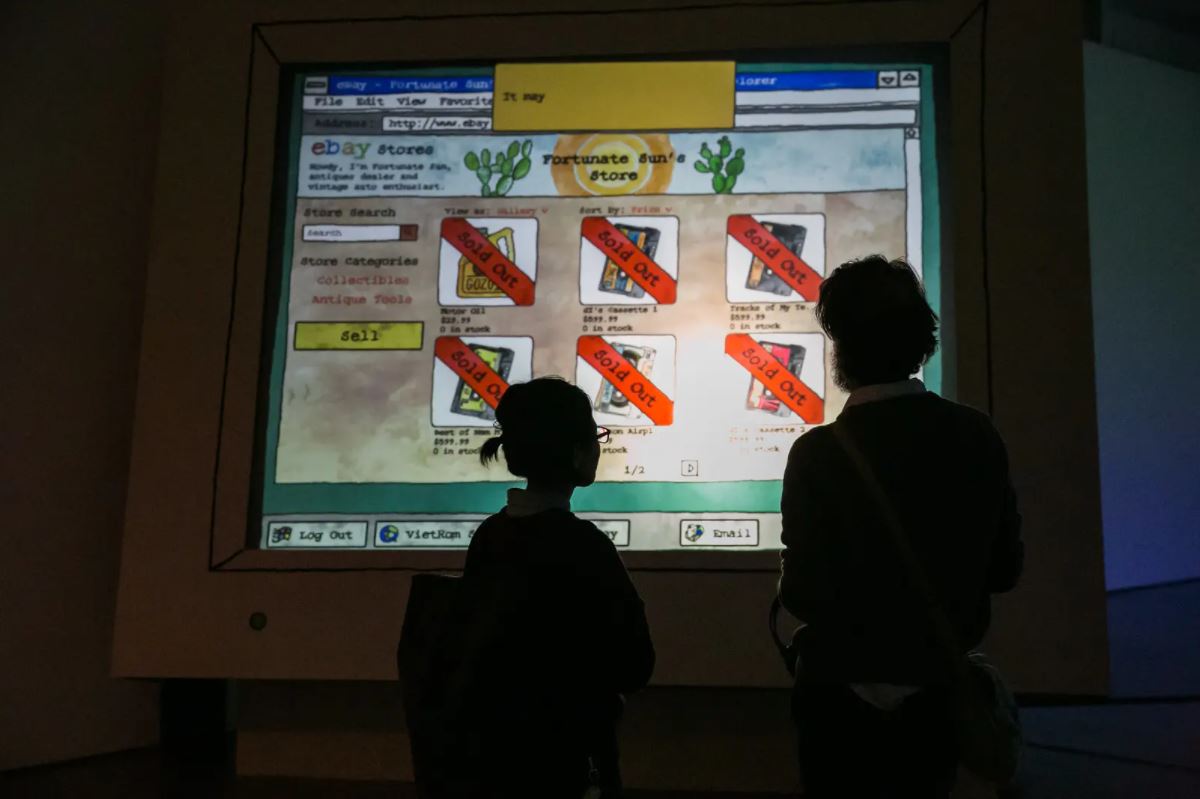
This installation required the tutorials and shopping scenes to be excerpted into their own build for a second projection on a giant sculptural computer monitor.

UCLA Game Art Festival (Los Angeles)
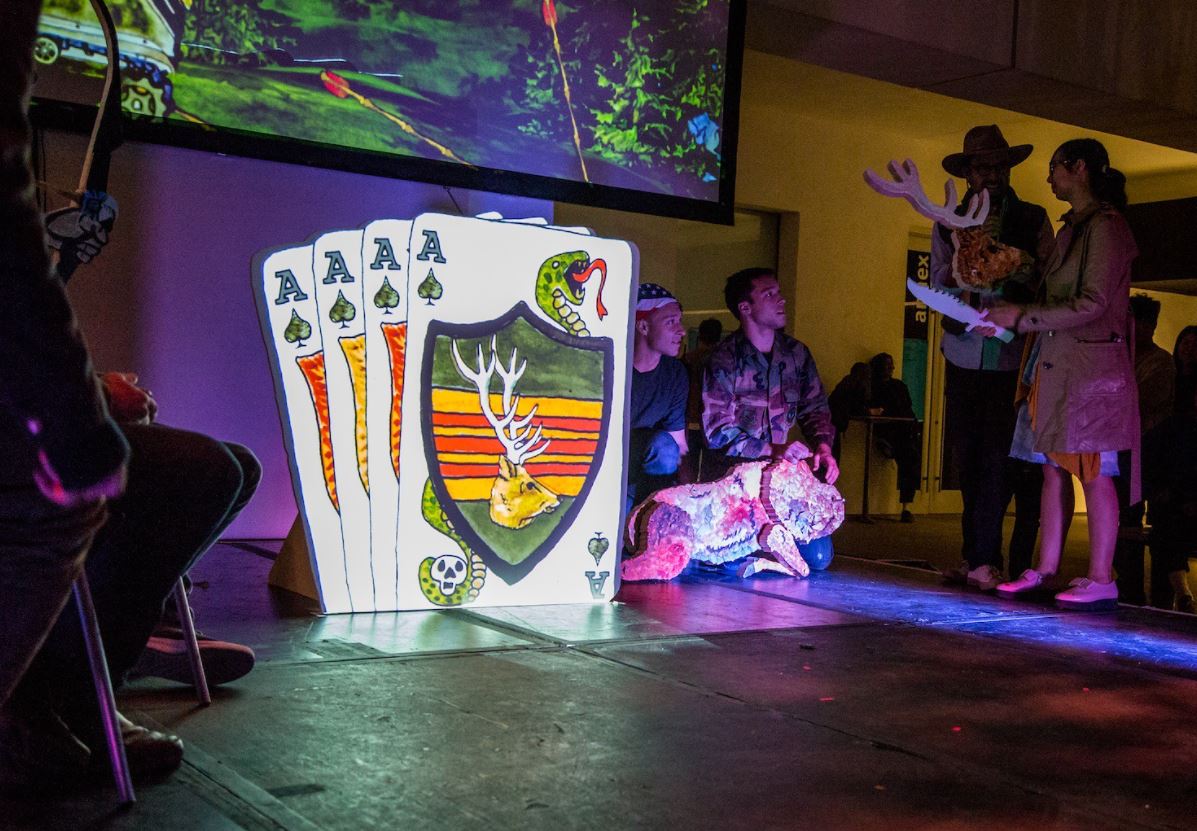
This installation had two projections: a main screen and a second projection displaying the player’s inventory as a hand of cards.
For the live performance version, players sat on stage and interacted with Lucas Near-Verbrugge, who also provided the voice and likeness of the in-game tour guide. To facilitate “game show mode”, I included a variety of audio cues that told us the state of the game (a distant bird call when the deer was scared off-screen, for instance) to signal how we should advise players, as well as a system to trigger certain game events using a wireless keyboard.
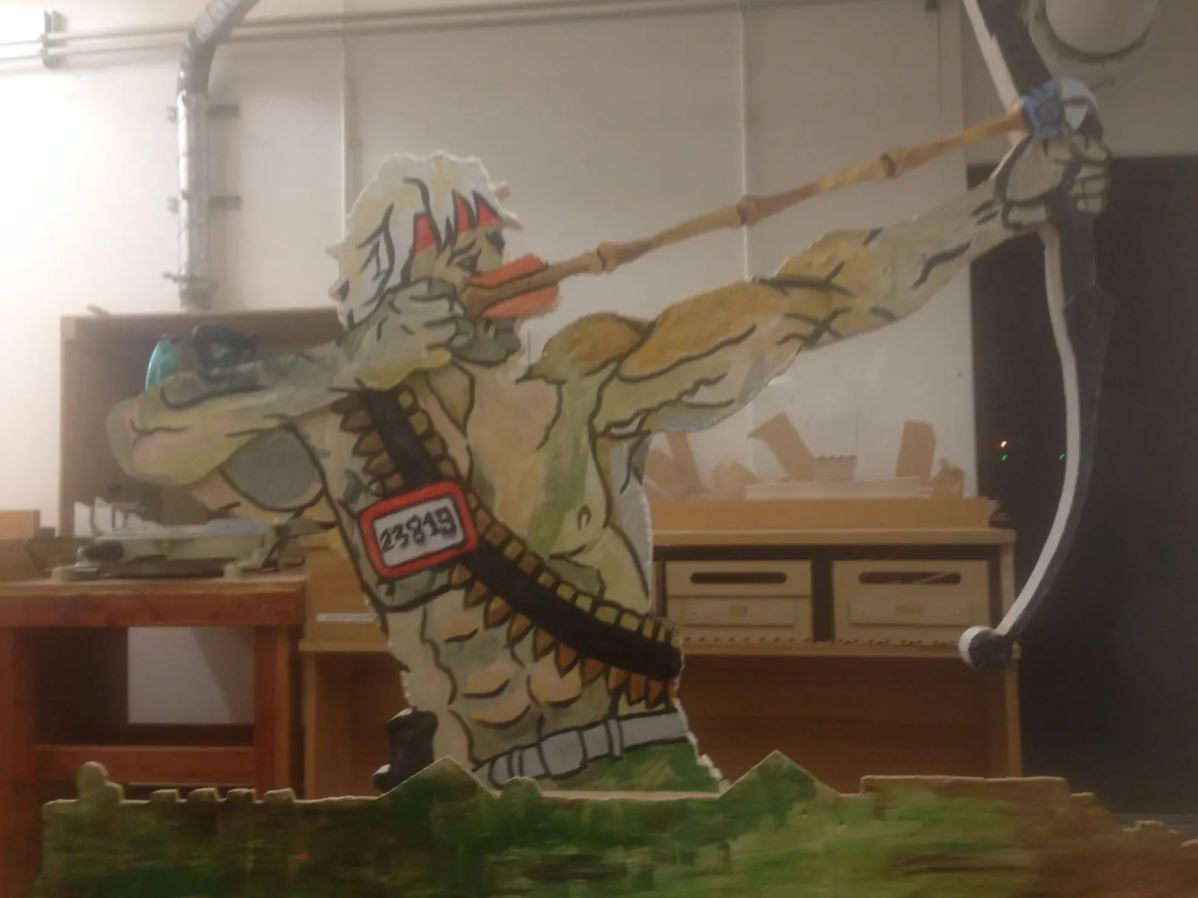
This version also included a large, physical Rambo puppet, which players manually held and rotated to aim. I helped with the electronics inside the puppet: an arduino reads a rotary encoder and converts the data to mouse movement on the vertical axis, which maps to the character’s rotation in the game.